
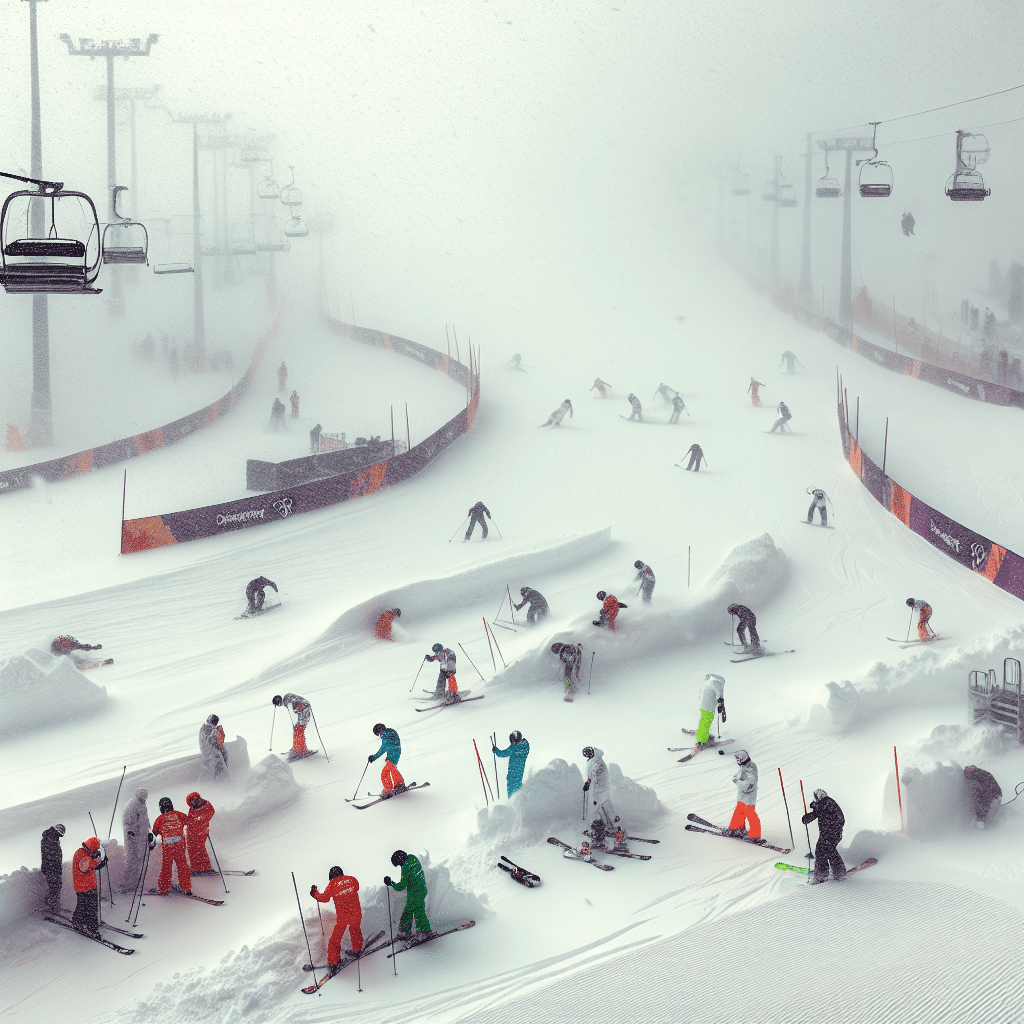

Heavy snowfall disrupted the schedule of the 2026 Winter Olympics in Livigno, Italy, causing organizers to postpone several key events scheduled for Tuesday. The persistent winter conditions, characterized by a steady snowfall and freezing temperatures, compelled officials to delay both the women’s snowboard slopestyle final and the start of the women’s aerials qualifying round. With visibility reduced and the risk of accidents heightened on the steep jumps and obstacle courses, safety remained the top priority. These weather-related postponements reflect the unpredictable nature of winter sports events, especially in high-altitude locations where conditions can change rapidly. As organizers monitor the weather and assess safety, athletes and fans are left awaiting new schedules and updates.
Impact of Weather on the Aerials Competition
Postponement of Women’s Aerials Qualifiers
The weather conditions made it unsafe to proceed with the women’s aerials qualifying round at the Livigno Aerials and Moguls Park. Despite good practice sessions just before the postponement, the steady snowfall, combined with temperatures plunging to approximately 21 degrees below zero Celsius, created challenging circumstances. Officials judged that visibility was too limited, and the snow buildup on the course could compromise competitors’ safety and performance.
Workers actively worked to manage the snow accumulation on the course, shoveling and trying to keep it as clear as possible. Nevertheless, the risks proved too significant for organizers to allow the event to go ahead. The qualification round, which includes top competitors like defending champion Xu Mengtao from China and silver medalist Hanna Huskova of Belarus — competing as a neutral athlete — was ultimately called off for the day. The organizers have yet to announce a reschedule, leaving athletes, coaches, and fans in limbo.
The decision to delay was made after hours of weather monitoring, with hopes that the conditions might improve sufficiently for a late start. However, logistical assessment and safety considerations ultimately led to the postponement. The men’s aerials event, originally planned for Tuesday afternoon, faced similar uncertainty, with officials not yet having announced a new date.
Rescheduling Challenges for the Women’s Aerials
The postponement of the women’s aerials qualifying round underscores the severe impact of weather in outdoor winter sports. Organizers face ongoing challenges in finding an optimal new slot amidst tight scheduling across the games. The athletes, some of whom are top contenders and defending champions, are left awaiting further instructions, with their preparation temporarily disrupted. The unpredictable winter weather in Livigno remains a concern, and officials continue to closely monitor conditions, emphasizing safety above all else.
Snowboard Slopestyle Event Postponed
Moving the Final to an Unsure Future Date
Alongside the aerials, the women’s snowboard slopestyle final was also canceled due to heavy snow. The event, which involves snowboarders maneuvering through various obstacles like metal rails and jumps, was scheduled for Tuesday afternoon at the Livigno Snow Park. The decision was made to postpone the competition to a later date, allowing organizers more time to prepare the course and ensure the safety of the athletes.
The slopestyle event attracts some of the sport’s biggest stars, among them New Zealand’s Zoi Sadowski-Synnott. The reigning Olympic gold medalist and current world champion led the qualifiers and was favored to contend for another medal. Her main competition is expected to come from Japan’s Murase Kokomo, who has also shown form in recent events. The delay puts a temporary halt on what promised to be an exciting showcase of skill and daring in the snow.
Organizers did not specify a new date for the slopestyle final, maintaining that it would be rescheduled as soon as conditions improve sufficiently. The postponement reflects the challenge of hosting outdoor winter sports amid unpredictable weather patterns that can dramatically change the landscape of the competition.
Broader Implications and Future Outlook
Organizers of the Livigno Winter Olympics are navigating the uncertainties of winter weather that can jeopardize both athlete safety and the integrity of competitions. Delays in major events like aerials and slopestyle may ripple into broader scheduling adjustments as the Olympic organizers seek to keep the event running efficiently.
Athletes, many of whom come with high expectations and rigorous training schedules, face the disappointment of cancellations but also the understanding that safety must always come first. For fans, it means adjusting expectations and awaiting official updates through Olympic channels.
The weather conditions in Livigno serve as a reminder of the inherent unpredictability faced in outdoor winter sports. While advancements in safety protocols and course management help mitigate some risks, nature still dictates the rhythm of events in many cases.
Looking forward, officials have expressed their commitment to resuming the competitions once conditions allow. Athletes and fans alike remain hopeful that the weather will clear, enabling a return to the exhilarating competitions that make the Winter Olympics such a captivating spectacle. However, organizers are also preparing contingency plans should weather disruptions persist, prioritizing athlete safety and the overall success of the Games.
In summary, the heavy snow on Tuesday forced Olympic officials to make difficult decisions to postpone key events. As the schedule adapts to these challenges, the focus remains on ensuring athletes can compete in safe conditions while maintaining the integrity of the competition. The resilience of organizers, athletes, and fans will be tested in the days ahead as Livigno continues to host these winter sporting moments amidst Mother Nature’s unpredictability.