

Brooks Koepka, the highly accomplished five-time major winner, is set to rejoin the PGA Tour under a new initiative called the Returning Member Program. This move marks a significant shift in the ongoing saga involving top golfers who have competed on LIV Golf, the live tournament series funded by Saudi Arabia’s Public Investment Fund. The program aims to give select players who left the PGA Tour a pathway back, provided they meet specific performance criteria and accept notable financial penalties. Koepka’s return is anticipated to occur at the upcoming Farmers Insurance Open at Torrey Pines from January 29 to February 1, with plans to participate in the WM Phoenix Open shortly afterward. His comeback underscores the evolving landscape of professional golf, especially regarding the relationships and rivalries between different tours and their top athletes.
Details of Brooks Koepka’s Return to the PGA Tour
Koepka, a dominant figure in the sport with nine PGA Tour wins, last played on the PGA circuit in March 2022 when he finished tied for 12th at the Valspar Championship. Since then, he has competed in LIV Golf, which has attracted several prominent players and has established itself as a rival to the PGA Tour. However, recent developments indicate that Koepka is reclaiming his privileges on the traditional tour through the newly established Returning Member Program.
According to a memo sent to PGA Tour players, obtained by ESPN, Koepka’s reintegration is expected to be formalized soon, pending application and approval processes. He will be eligible to play in major tournaments such as the Masters, PGA Championship, U.S. Open, and The Open Championship, thanks to his win at the 2023 PGA Championship, which grants him a five-year exemption. Nonetheless, his ability to compete in the tour’s signature events—like The Players Championship and the eight designated tournaments—will depend on his performance, either via winning or through qualification pathways introduced by the tour.
The tour intends to expand field sizes in key events to accommodate returning players without affecting current members’ opportunities to qualify. This approach is designed to maintain fairness and ensure the top-ranked players, whether new or returning, have adequate chances to compete. The team at the PGA Tour emphasized that the Returning Member Program is a one-off solution motivated by unique circumstances, explicitly stating there is no intention of creating a precedent for future reentry processes.
The Eligibility and Conditions of the Returning Member Program
The policy applies mainly to LIV Golf players who have been absent from the PGA Tour for at least two years and have achieved significant success—winning at least one of the four majors or the Players Championship since 2022. This standard is intended to ensure that only top-tier athletes with recent high achievements qualify for re-entry.
Among the notable players eligible under these rules are Bryson DeChambeau, who won the U.S. Open in 2024; Jon Rahm, the 2023 Masters champion; and Cameron Smith, the winner of the 2022 Players Championship and The Open. These players can re-enter the tour but will face substantial consequences for leaving, including severe financial penalties and forfeiture of equity shares.
In particular, Koepka has agreed to forfeit any of his Player Equity shares for the next five years—that’s a major financial setback—meaning he could potentially miss out on between $50 million and $85 million in earnings over this period, depending on his performance and the project’s growth. In addition, he has committed to donating $5 million to charity, a gesture that underscores the personal and professional costs involved in his decision to return.
The tour’s CEO, Brian Rolapp, confirmed that Koepka was the first to apply under this program, submitting his application on the day it opened, and had a face-to-face meeting with Rolapp at the tour’s headquarters. The PGA Tour’s governing board, which includes big names like Tiger Woods, Patrick Cantlay, and Adam Scott, approved the program and Koepka’s reinstatement.
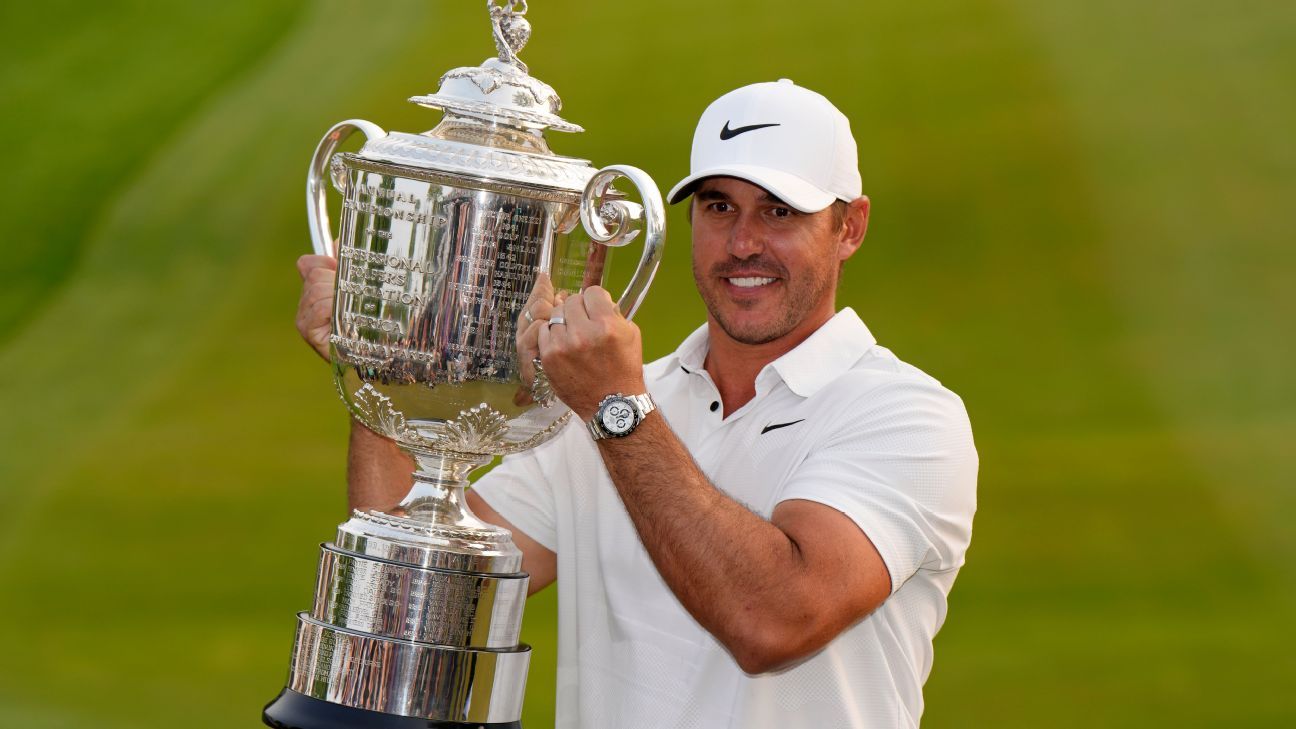
Koepka’s return is also contingent upon meeting certain competitive criteria to secure spots in top-tier events. Since he currently ranks 244th in the Official World Golf Ranking (OWGR) due to the lack of ranking points from LIV Golf, he won’t automatically qualify for the signature events through OWGR. Instead, he must qualify via other pathways, such as finishing in the top 10 of FedEx Cup points, the top five in FedEx Cup points among non-exempt players, or the top 30 in OWGR outside of existing exemptions.
To make room for returning players, the PGA Tour announced it would expand fields at major events. Also, a returning member’s participation in the FedEx Cup playoffs and the Presidents Cup will be allowed if they qualify, ensuring their ability to compete for the highest honors and end-of-season awards. Importantly, these inclusions will not displace existing members, as the tour plans to expand its fields as necessary, maintaining fairness across the board.
Impacts on Players, Tour Dynamics, and the Future of Professional Golf
Koepka’s return does not come without controversy. Many current PGA Tour members and fans remain divided about reintegration policies for LIV Golf athletes. Top players like Rory McIlroy have publicly expressed support for the idea of former LIV competitors coming back, citing a desire to see the best players compete on the sport’s biggest stages. However, some members question whether such a move undermines the integrity of the tour, especially given the financial penalties and the loyalty issues involved.
The decision underscores a fundamental shift within the PGA Tour, which appears increasingly willing to forgive past defections and welcome back star players under certain conditions. CEO Brian Rolapp described the program as a “direct response to a unique situation,” aimed at strengthening the tour, ensuring current members retain opportunities, and satisfying fan demand to see the sport’s top talent in competition.
Notably, Koepka’s move could influence future negotiations and policy decisions within professional golf. His status as a five-time LIV winner—yet a player with a deep history on the PGA Tour—symbolizes the complex crossroads the sport now faces. With the possibility of other LIV golfers following suit, the landscape of professional golf may be shifting toward a more integrated, albeit still contentious, future.
Meanwhile, Koepka remains committed to his career on the PGA Tour, acknowledging the sacrifices he has made. “I think we all hoped it would have been a little bit further along, and that’s no secret,” he said in April 2025, reflecting on LIV Golf’s status now in its fourth season. His return, along with those of other high-profile players, has the potential to rekindle interest in traditional tournaments and strategically reshape the competitive landscape.
As the tour moves forward, all eyes will be on how the players, the administration, and the fans respond to this historic reintegration. The program’s success could set a precedent for future player movements and define the direction of professional golf for years to come.